The Complete Guide to AI SEO for Better Visibility in Google AI Mode, ChatGPT & AI Search Engines
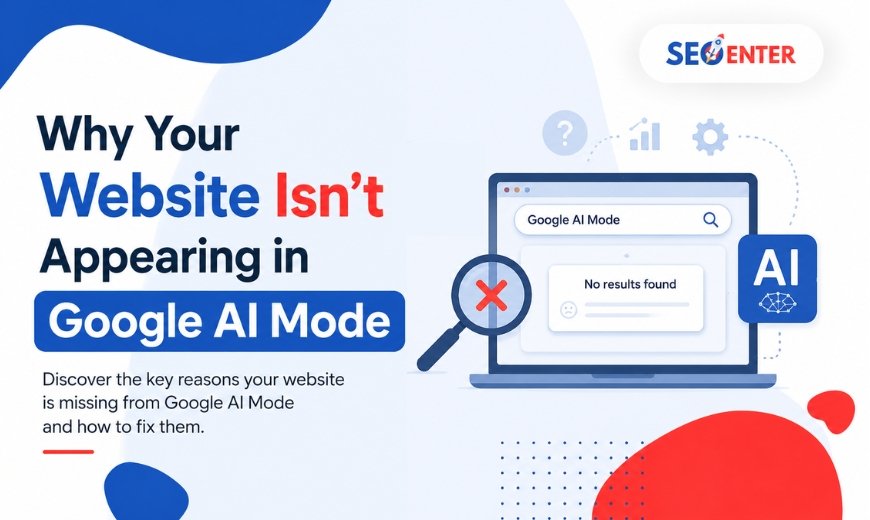
Why Isn’t Your Website Showing in Google AI Mode?
Have you noticed that your website ranks on Google Search but doesn’t appear in Google AI Mode or AI Overviews? You’re not alone.
With the rapid adoption of AI-powered search experiences, Google is transforming how users discover information. Instead of displaying only a list of websites, Google AI Mode provides direct, conversational answers by combining information from multiple trusted sources.
This means businesses can no longer rely solely on traditional SEO. To stay visible, your website must be optimized for AI SEO, Answer Engine Optimization (AEO), and Generative Engine Optimization (GEO).
In this guide, we’ll explain why your website may not be appearing in AI-generated search results and what you can do to improve your visibility.
What Is Google AI Mode?
Google AI Mode is Google’s AI-powered search experience that uses advanced language models to generate comprehensive answers to user queries.
Rather than simply listing web pages, AI Mode analyzes trusted content across the web and presents summarized responses, often citing multiple authoritative sources.
For businesses, this means the competition has shifted from ranking #1 on Google Search to becoming a trusted source for AI-generated answers.
Why Your Website Isn’t Appearing in Google AI Mode
Here are the most common reasons businesses miss out on AI search visibility.
1. Your Content Doesn’t Answer Real User Questions
AI systems prioritize content that directly answers questions.
Many websites still focus on keyword stuffing instead of providing clear, helpful answers.
Instead of writing: “We provide professional SEO services.”
Write: “Professional SEO services help businesses increase organic traffic, improve search rankings, generate qualified leads, and grow revenue through strategic optimization.”
AI prefers complete, informative responses.
2. Your Website Lacks Topical Authority
Publishing one article about SEO isn’t enough.
Google wants to see expertise demonstrated across an entire topic.
For example, an AI SEO agency should publish content covering:
- AI SEO
- Google AI Mode
- AEO
- GEO
- Technical SEO
- Schema Markup
- EEAT
- AI Content Optimization
- AI Search Ranking
- AI Overview Optimization
The more comprehensive your content ecosystem, the more likely AI will consider your website a trusted resource.
3. Poor Website Structure
AI systems understand well-organized content more effectively.
Use:
- Clear H1, H2, and H3 headings
- Short paragraphs
- Bullet points
- Numbered lists
- Tables where appropriate
- Internal links to related content
A clean structure improves readability for both users and AI systems.
4. Missing Structured Data (Schema Markup)
Schema markup helps search engines understand your content.
Important schema types include:
- FAQ Schema
- Article Schema
- Organization Schema
- Local Business Schema
- Breadcrumb Schema
- Review Schema
- Product Schema (where applicable)
Structured data increases the chances of your content being interpreted accurately by AI-powered search systems.
5. Weak EEAT Signals
Google evaluates websites based on Experience, Expertise, Authoritativeness, and Trustworthiness (EEAT).
Strengthen EEAT by:
- Publishing expert-written content
- Including author profiles
- Displaying certifications and awards
- Showcasing client testimonials
- Sharing real case studies
- Keeping contact information transparent
- Regularly updating content
Trustworthy websites are more likely to be referenced by AI-generated answers.
6. Your Content Is Outdated
AI search engines prefer fresh, relevant information.
If your blog hasn’t been updated in years, it may lose visibility.
Review and update content by:
- Adding current statistics
- Refreshing examples
- Including recent industry trends
- Updating screenshots
- Improving readability
Regular updates signal that your content remains accurate and valuable.
7. Your Website Isn’t Optimized for User Experience
Google considers user experience an important quality signal.
Check that your website offers:
- Fast loading speeds
- Mobile-friendly design
- Secure HTTPS connection
- Easy navigation
- Accessible content
- Minimal intrusive pop-ups
A better user experience can contribute to stronger search performance.
How to Optimize Your Website for Google AI Mode
Here are practical steps to improve your chances of appearing in AI-generated results.
Create Answer-Focused Content
Address specific user questions clearly and concisely before expanding with supporting details.
Build Topic Clusters
Instead of publishing isolated articles, create interconnected content around core topics.
Add FAQ Sections
Well-written FAQs help AI understand common user intent and often align with conversational search queries.
Use Semantic Keywords
Include related terms naturally rather than repeating the same keyword excessively.
Strengthen Internal Linking
Connect relevant pages and blogs to help search engines understand your site’s expertise.
Optimize Images
Use descriptive file names, alt text, and image compression to improve accessibility and performance.
Improve Technical SEO
Ensure your website has:
- XML sitemap
- Clean URL structure
- Canonical tags
- Proper indexing
- Optimized Core Web Vitals
- No broken links
Traditional SEO vs AI SEO
| Traditional SEO | AI SEO |
| Focuses on rankings | Focuses on AI-generated answers |
| Keyword optimization | User intent optimization |
| Meta tags | Structured content |
| Backlinks | Authority + relevance |
| Search snippets | Conversational answers |
| Search engines | AI-powered search platforms |
Both approaches complement each other, and businesses should invest in both for long-term visibility.
Why AI SEO Matters for Businesses
As more users rely on AI assistants to find products, services, and answers, businesses that adapt early gain a competitive advantage.
Benefits include:
- Greater visibility across AI-powered search platforms
- Higher-quality organic traffic
- Increased brand credibility
- Better lead generation
- Improved customer trust
- Long-term digital growth
How SEO Enter Can Help
At SEO Enter, we specialize in helping businesses prepare for the future of search with comprehensive AI SEO strategies.
Our services include:
- AI SEO (AEO + GEO)
- Technical SEO Audits
- AI-Optimized Content Creation
- Schema Markup Implementation
- Topic Cluster Development
- EEAT Optimization
- Website Performance Improvements
- Ongoing SEO Strategy and Reporting
Whether you’re a startup or an established business, we help ensure your website is ready for both traditional search engines and AI-powered search experiences.
Final Thoughts
Google AI Mode is reshaping how people search online. Businesses that rely only on traditional SEO risk losing visibility as AI-generated answers become more prominent.
By focusing on high-quality content, structured data, technical optimization, topical authority, and user-focused experiences, you can improve your chances of being recognized by AI search systems.
The future of search is AI-driven—and the best time to optimize your website is now.
Frequently Asked Questions (FAQ’s)
1. Why isn’t my website appearing in Google AI Mode?
Common reasons include insufficient topical authority, weak EEAT signals, outdated content, missing structured data, and content that doesn’t directly answer user questions.
2. What is Google AI Mode?
Google AI Mode is an AI-powered search experience that generates conversational answers by analyzing information from trusted websites instead of only listing search results.
3. How is AI SEO different from traditional SEO?
Traditional SEO focuses on improving rankings in search results, while AI SEO aims to make content understandable, trustworthy, and useful enough to be referenced in AI-generated answers.
4. What is Answer Engine Optimization (AEO)?
AEO is the practice of structuring content so AI assistants and search engines can easily identify and present direct answers to user questions.
5. What is Generative Engine Optimization (GEO)?
GEO focuses on optimizing content for AI-powered search platforms like Google AI Mode, ChatGPT, Gemini, Claude, and Perplexity so they can accurately reference and summarize your content.
6. Does schema markup help with AI SEO?
Yes. Schema markup provides structured information that helps search engines and AI systems better understand your website’s content and context.
7. How long does it take to see AI SEO results?
The timeline varies based on your website’s authority, competition, and content quality. Consistent optimization over several months generally produces the best results.
8. How can SEO Enter help my business appear in Google AI Mode?
SEO Enter offers AI SEO services, including AEO, GEO, technical SEO, content optimization, schema implementation, EEAT enhancement, and topic cluster development to improve your visibility across AI-powered search platforms.